Pascal Rüeger recently set the Swiss 100 km national record — an outstanding achievement and a remarkable comeback. His performances have drawn significant attention within the international ultrarunning community.
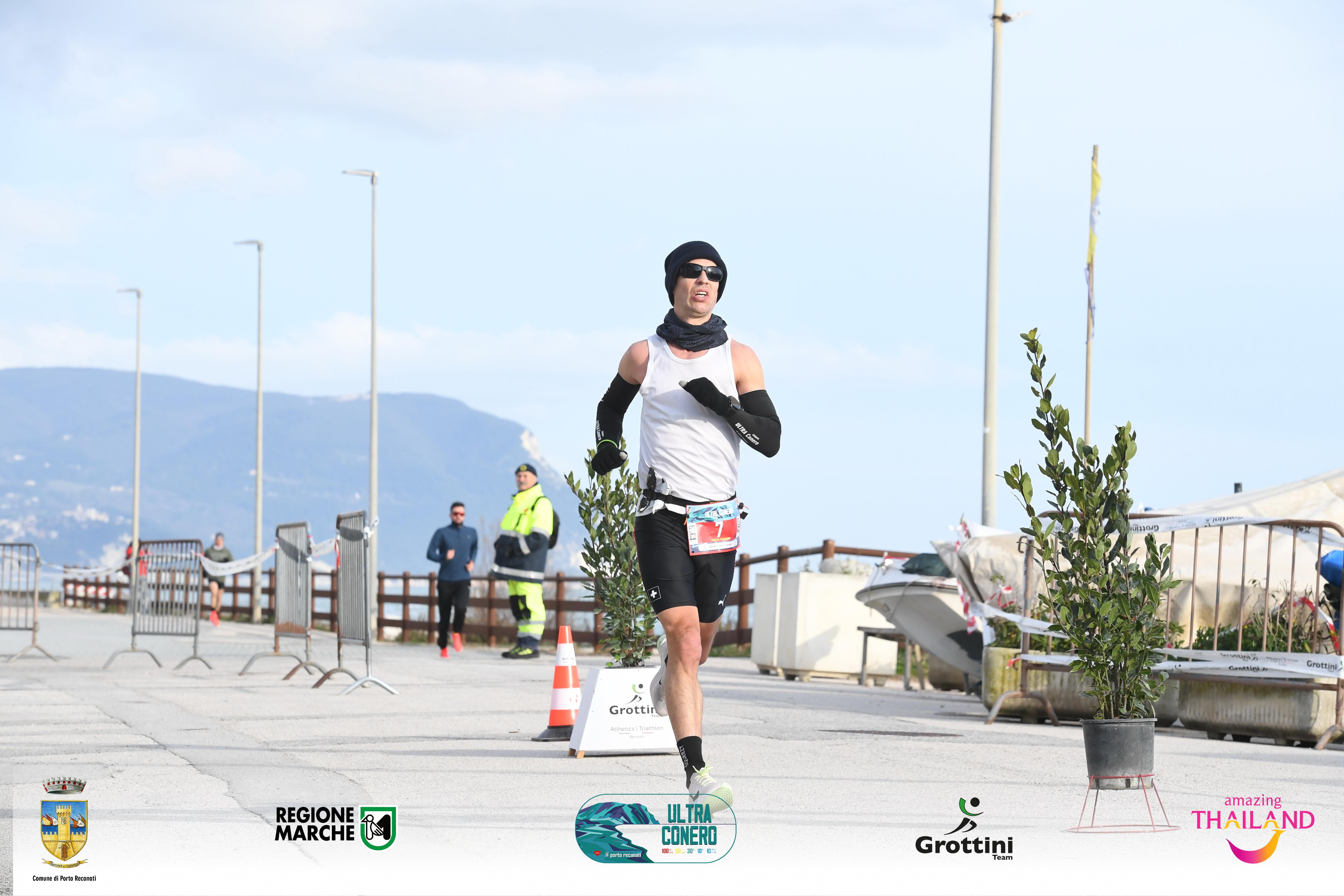
Maja - Last month you set the Swiss national record for 100 km. How meaningful is this achievement for you after some challenging seasons?
Pascal - I have tried several times to run a fast 100 km race at a single event. From a rational perspective, the potential is clearly visible in the training data and performance metrics — the numbers suggest what should be possible. I have also managed strong performances over six hours (and 12 hours), which further confirms that the ability is there.
On race day, however, many other variables need to fall into place, and as a runner you can’t control all of them. That’s why I was very happy that everything aligned on that day and I was able to unlock a large part of my potential.
Maja - In recent years, there were races you were unable to finish. From your perspective, what was happening during that period, and what lessons did you take from those experiences?
Pascal - Anyone who stands on the start line with a clear goal such as chasing a record time must accept that failure is always a possibility. When you aim that high, things will not always work out. Every setback hurts, sometimes deeply.
At the same time, I am not the kind of runner who simply finishes a race for the sake of finishing. If I stand on the start line, it is because I believe something special might be possible. That mindset comes with risks, but it is also what makes the pursuit meaningful.
Over the years, I have had to learn patience. Real patience. Ultrarunning teaches you not to give up.
Maja - What were the main physical or psychological challenges behind those DNFs, and how did you work through them?
Pascal - There are several aspects to this. When I run, my goal is always to achieve my personal best and meet my individual performance target — and that already starts in training. If that’s not the case, I might as well stop the race. For me, a DNF is essentially the same as delivering a performance I’m not satisfied with.
Maja - Was there a defining moment or race where you felt you had truly regained your confidence and competitive edge?
Pascal - For me, it was clear going into this race that I absolutely wanted to run the Swiss national record. To achieve that, I set several intermediate goals:
- Settle comfortably into record pace within the first 10–20 km
- Maintain stable pacing during the first half of the race
- Build enough of a time buffer by 60 km, because I knew the rising wind would cost time later on.
All of these intermediate goals gave me confidence and reassurance during the race.
Maja - At SLO12RUN in Kranj, Slovenia (June 2023), where you won the 12‑hour race, you demonstrated remarkable consistency and race management. What was your strategy?
Pascal - If you want to run over 100 miles (161.250 km) in a 12‑hour race, it’s important that you can still run the first three marathons in a stable way. If problems arise before that, you have to switch to a different strategy.
In timed races, I tell myself that you’ll have to fight through all 12 hours anyway, so you might as well go as fast as possible — that way you won’t be disappointed later.
Maja - What did your victory at SLO12RUN 2023 bring you personally and professionally? Do you feel that this win placed you among the leading names in international ultrarunning?
Pascal - Of course, it helps to win important races in order to make a statement internationally. Before SLO12RUN, I had already delivered a similar performance in a 12‑hour race, but it was at a less well‑known event. That’s why this race was important to me — and one I really wanted to win.
Maja - From your experience at the highest level of ultrarunning, how important is mental strength compared to physical preparation?
Pascal - The mental component is harder than the physical one. When it comes to physical training, sports science gives you a fairly clear idea of what needs to be done to make progress. Mentally, however, you face challenges during the race that are difficult to prepare for. In those moments, experience matters most.
Maja - Looking ahead, what are your main goals on the international stage? Perhaps the IAU 100 km World Championships in Spain?
Pascal - Of course, it appeals to me to achieve a good result in a 100 km World Championship race, especially since those races are run more strategically rather than purely for time. In the past, I haven’t performed well at World Championships, so there is still a lot I can learn there.
On the other hand, 100 km is actually a bit short for me. I see my strengths much more on longer distances, and that’s where I want to realize more of my potential in the future.
That said, I think I will run the Mauerweglauf Berlin in August to defend my course record and title, and then line up in Spain in September. So… yes!
Maja Rigač
IAU Communications Committee
March 2026